
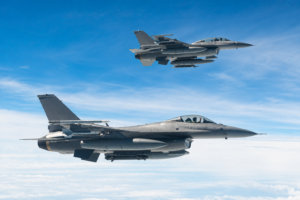
 In November 2026, a Richland County, State of South Carolina jury awarded $24 million to the family of a 36-year-old pilot. He died after a radiologist read his chest CT scan as normal. The scan showed signs of an atrial-esophageal fistula, a rare and deadly complication of cardiac ablation. Kassel McVey attorneys John Kassel and Jamie Rutkoski tried the case for eight days.
Every case is different. A past result for one client does not mean the firm can get a similar result for another.
Key facts
| Verdict | $24,000,000 |
| Case type | Medical malpractice and wrongful death |
| Defendant | The radiologist who read the CT scan |
| The error | A CT angiogram was reported as normal with no urgent call to the care team |
| The condition | Atrial-esophageal fistula (AEF) after cardiac ablation |
| The patient | A 36-year-old F-16 pilot, husband, and father of two |
| Trial length | 8 days |
| Economic loss | $7,354,650 in lost future income |
| Court | Richland County Court of Common Pleas, Columbia, South Carolina |
| Trial lawyers | John Kassel and Jamie Rutkoski of Kassel McVey, Attorneys at Law |
Who was the patient?
He was a 36-year-old F-16 fighter pilot with four combat deployments to the Middle East. He graduated from the U.S. Air Force Weapons School, a highly selective program for top pilots. He also flew for a major airline.
He had been married for 11 years. He and his wife had two children, ages 11 and 7.
What happened after the cardiac ablation?
In June 2020, he had a cardiac ablation to treat atrial fibrillation. Both the condition and the procedure are common. An electrophysiologist did the procedure.
- After the ablation. He had chest pain, fever, joint pain, eye problems, and headaches. He was readmitted overnight and diagnosed with pericarditis, a swelling of the thin lining around the heart.
- Treatment. He was given two anti-inflammatory drugs, colchicine and indomethacin. He did not get much better, though he went back to work for a time.
- Early July. The electrophysiologist prescribed a steroid. His symptoms eased, but the cause was still there.
- About five weeks after the ablation. He woke with numbness and tingling in his arms and legs. An ambulance took him to the emergency department.
- In the emergency department. His heart rate rose. He ran a high fever and became confused. Doctors ordered a CT angiogram of his chest.
- The CT report. The radiologist reported the scan as essentially normal. He did not flag anything as urgent.
- Two and a half hours later. His confusion got worse. He could no longer protect his airway, so he was sedated and put on a breathing tube. He showed signs of sepsis.
- The next 11 days. He stayed in the hospital, sedated for most of that time. Doctors found a heart infection and sepsis that caused strokes in the brain. They never found the source. He died on day 11. No autopsy was done.
His wife asked Kassel McVey to find out why he died.
What is an atrial-esophageal fistula?
An atrial-esophageal fistula, or AEF, is a hole that forms between the heart and the esophagus. It is also spelled atrioesophageal fistula. It is a rare complication of cardiac ablation.
During an ablation, heat is applied to the back wall of the left atrium to stop the abnormal rhythm. The esophagus sits just behind that wall. In rare cases, the heat can damage the esophagus, forming an opening or communication between the two.
That opening lets bacteria, food debris, and air pass from the esophagus into the heart and the blood. From there, they can travel to the brain and cause strokes. The kidneys and the heart itself can also be harmed.
Why is AEF a surgical emergency?
AEF is fatal if it is not treated. The best outcomes depend on catching it early and operating quickly to close the opening. Every hour of delay lets more bacteria and air enter the blood.
What did the CT scan show?
The family’s experts testified that the scan showed signs highly suggestive of AEF. Experts in radiology, cardiothoracic surgery, and electrophysiology all gave that opinion.
After the ablation. He had chest pain, fever, joint pain, eye problems, and headaches. He was readmitted overnight and diagnosed with pericarditis, a swelling of the thin lining around the heart.’
Treatment. He was given two anti-inflammatory drugs, colchicine and indomethacin. He did not get much better, though he went back to work for a time.
Early July. The electrophysiologist prescribed a steroid. His symptoms eased, but the cause was still there.
About five weeks after the ablation. He woke with numbness and tingling in his arms and legs. An ambulance took him to the emergency department.
In the emergency department. His heart rate rose. He ran a high fever and became confused. Doctors ordered a CT angiogram of his chest.
The CT report. The radiologist reported the scan as essentially normal. He did not flag anything as urgent.
Two and a half hours later. His confusion got worse. He could no longer protect his airway, so he was sedated and put on a breathing tube. He showed signs of sepsis.
The next 11 days. He stayed in the hospital, sedated for most of that time. Doctors found a heart infection and sepsis that caused strokes in the brain. They never found the source. He died on day 11. No autopsy was done.
The key finding was simple. Air looks black on a CT image. Contrast dye in the left atrium looks white. A black area inside the white left atrium is highly unusual. In a patient with a recent ablation and signs of sepsis, it points to AEF.
At trial, Kassel McVey showed the jury CT images from published medical articles on confirmed AEF cases. Those images showed a black area in the white left atrium. The airman’s scan closely matched them.
The family’s radiology expert testified that the radiologist should have seen the finding, put it in his report, and phoned the ordering doctor right away. Had he done so, a heart surgeon would have been called and surgery offered. The family’s experts testified that the airman would have made a full recovery with timely surgery.
What did the defense argue?
Both sides agreed on the cause of death. The defense’s own experts in cardiac surgery and critical care testified that the airman died from an unrecognized AEF. The dispute was over whether the CT scan showed it.
The defense made four main arguments.
- The scan was normal. The defense radiology expert testified that the CT showed nothing abnormal or suspicious.
- AEF is very rare. The defense said it appears on a tiny fraction of one percent of chest CTs.
- The radiologist lacked context. He was asked to rule out a blood clot in the lungs. He was not told about the ablation or the patient’s symptoms. The scan was also not a gated study, the type of CT used to look for AEF.
- The black area was motion artifact. The defense said it was a blur caused by imaging a beating heart, not air.
The artifact argument conflicted with the radiologist’s own earlier testimony. In his deposition, he identified the black area as air. At trial, he testified that it was artifact and that he misspoke in the deposition.
The jury found that the abnormality was there to be seen.
Could he have survived with surgery?
The defense argued that he could not. It said he was too sick to be offered surgery, and that he would have had severe brain injury even if he lived.
Kassel McVey presented medical studies and expert testimony showing that survival with timely surgery was excellent.
How did the jury reach $24 million?
The jury returned a verdict of $24 million for the airman’s family after an eight-day trial. The verdict covered four kinds of loss.
- Lost future income. His careers as an airline pilot and a military pilot both ended. Damages experts mapped out his expected path in each and put the loss at $7,354,650. The defense did not dispute that figure.
- Conscious pain and suffering. What he went through before he died.
- Wrongful death. The loss to his wife and two children.
- Loss of consortium. His wife’s loss of her husband’s companionship.
In closing, the family’s lawyers suggested a verdict of $23,354,650. That is the economic loss plus $16 million. The jury awarded $24 million.
According to John Kassel, “this airman always came home after flying combat missions in the middle east. It was a shame he could not survive this one”.
What does this case mean for other families?
A radiologist’s report can decide whether a patient gets treated in time. When a scan is read as normal, the care team often moves on to other causes. This case shows that a missed finding on a scan can be grounds for a malpractice claim, even when the condition is rare.
It also shows that a family may not know the real cause of death at first. Here, the hospital never found the source of the infection. The answer came later, when outside experts reviewed the records and the scan.
Talk to a Columbia medical malpractice lawyer
If someone in your family was harmed after a scan was misread or a diagnosis was missed, Kassel McVey can review what happened. Call (803) 256.4242 or contact us for a free case review.
Frequently asked questions
Can you sue a radiologist for misreading a CT scan?
Yes. A radiologist can be held liable when a misread falls below the standard of care and causes harm. Proving it takes expert testimony on what the scan showed and what a careful radiologist would have done. In this case, the jury found the abnormality was there to be seen.
What is an atrial-esophageal fistula?
It is a hole or communication between the left atrium of the heart and the esophagus. It is a rare complication of cardiac ablation. It lets bacteria and air enter the blood stream and is fatal without treatment.
What were the warning signs after the ablation in this case?
The airman had chest pain, fever, joint pain, and headaches in the weeks after his procedure. About five weeks out, he had numbness and tingling in his arms and legs, then confusion. Anyone with symptoms like these after an ablation should get emergency care and tell the doctors about the ablation.
Can AEF be treated?
It can, if it is caught in time. Treatment is surgery to close the opening. In this case, experts testified that the airman would have survived with a full recovery if surgery had been done promptly.
Is a missed diagnosis always malpractice?
No. A missed diagnosis is malpractice only when the provider failed to meet the standard of care and that failure caused harm. Both must be proven.
How long do you have to file a medical malpractice claim in South Carolina?
The statute of limitations for state funded healthcare providers is two years and for providers in private practice, the statute of limitations is three years. The statute of limitations is a discovery statute. That means the statute begins to run when you knew or should have known you had a potential claim against a healthcare provider. In no case can you bring a claim of negligence more than six years after the negligence.
Awards & Memberships

Personal Injury Lawyers 1330 Laurel Street Columbia, SC 29201 Phone: 803-256-4242
Mailing Address
Post Office Box 1476
Columbia, South Carolina 29202
Fax: (803) 256-1952
Copyright © 2023 John D. Kassel, Attorney at Law, LLC. All rights reserved. Privacy Policy I Terms of Service | Disclaimer
This website is designed for general information only. The information should not be construed to constitute formal legal advice or the formation of a lawyer/client relationship. The results and testimonials listed on this website are specific to the facts and legal circumstances of specific cases and should not be used to form an expectation that the same results could be obtained for other clients in similar matters. This list is not a description or characterization of the quality of the firm's representation, it is not intended to compare one attorney's work to another and is in no way a guarantee of a specific result for your case.